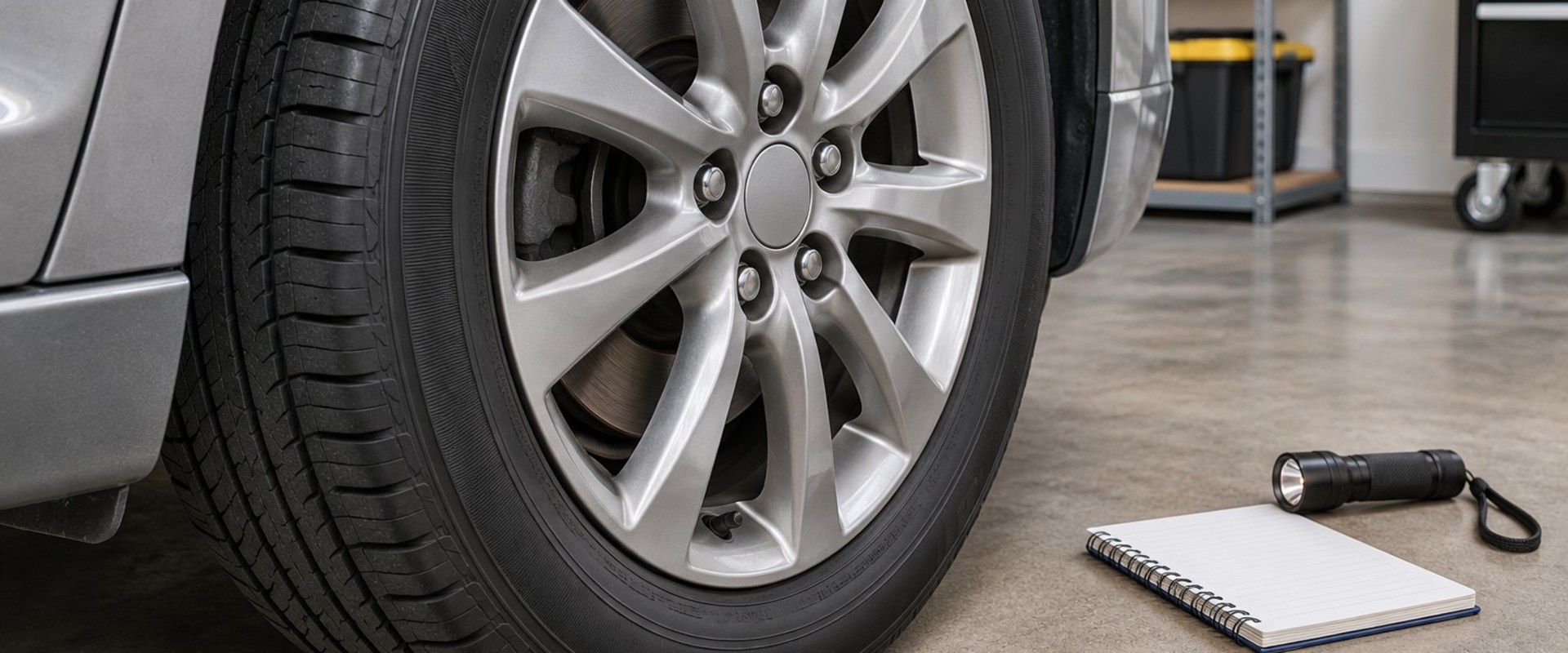
When did your tires enter service, and when were they manufactured? Those are different dates. Keeping both in your vehicle records makes a tire inspection more informative, especially for a low-mileage car or a spare that rarely leaves its storage space.
Locate the manufacturing date
NHTSA's TireWise guidance explains that the last four digits of the tire identification number indicate the week and year of manufacture. It also warns that tires become more prone to failure as they age. Ask a tire professional to help locate and interpret the marking if it is difficult to read.
Record each tire's information rather than assuming the whole set was made at the same time. Keep the purchase invoice too. A replacement made after a puncture may have a different history from the other tires on the vehicle.
Include the spare in the conversation
If your vehicle has a spare, ask the service provider to include it in the inspection and maintenance discussion. Do not assume that unused tread means the tire has not aged. NHTSA specifically advises against using a full-size spare as a replacement for worn tires except in an emergency such as a flat.
Check the owner's manual for the spare's use restrictions and maintenance instructions. If the vehicle instead has an inflation or repair kit, record what is supplied and follow its instructions; do not assume every vehicle has the same roadside equipment.
Combine the record with regular inspections
Age is one part of the discussion, alongside observed condition and the vehicle and tire manufacturers' guidance. Ask the professional to explain the recommendation for your particular tires rather than applying an unsupported universal lifespan.
Our overview of regular tire rotations fits into the wider maintenance routine. When a scheduled visit takes place, update the record with the date, mileage and any inspection findings or replacement recommendations.
Keep the information useful after a replacement
After fitting new tires, retain the product information and invoice and note which positions received replacements. Ask the installer about the appropriate future inspection schedule and any requirements specific to the tire and vehicle combination.
A simple file is enough: manufacture dates, installation dates, mileage and professional findings. It cannot certify a tire's condition, but it gives the service provider useful history and helps you avoid overlooking an aging spare simply because it looks unused.


